.png)
.png)
The
Mental
Edge
Field
Manual
A Plug-and-Play Mental Performance System
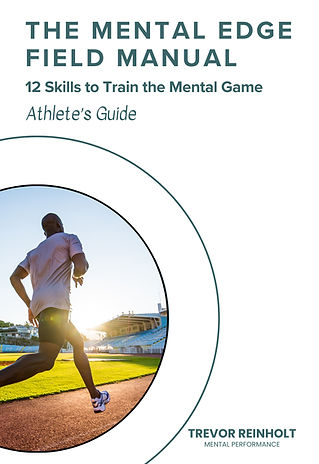
The Mental Edge Field Manual is a 12-skill mental performance field manual that gives any athlete, coach, team, or program a complete mental toolkit.
ONE SYSTEM, TWO VERSIONS. There are separate versions built specifically for coaches and for athletes. Same 12 skills. Same drills. Two different lenses. One shared language across your entire program.
SIMPLE enough for any athlete or coach to pick up and apply immediately with no specialized training or background
SHORT enough to fit your already busy schedule. Drills can be practiced in just a few minutes each day in real practices and games
SUSTAINABLE: A plug-and-play system you can come back to year-after-year, season-after-season

The Mental Edge Framework:
12
Skills
To
Build
A
Complete
Mental
Toolkit
1. Enjoyment
Sport is meant to be fun — and athletes who genuinely love the game consistently outperform those who are only chasing results. This skill helps athletes reconnect with their love of competition, find joy in the process, and perform with a freedom that the scoreboard alone can never provide.
2. Goal-Setting
Great athletes don't just show up and work hard — they train with a purpose. This skill teaches athletes how to set meaningful goals, build a clear direction for their development, and stay motivated through the grind of a long season.
3. Mindset
How you see a challenge determines how you respond to it. Athletes with a strong mindset turn setbacks into opportunities, failures into feedback, and pressure into fuel. This skill builds the mental foundation everything else is built on.
4. Self-Talk
The voice in your head is either your biggest coach or your biggest critic. Athletes learn how to recognize when their inner voice is working against them, reframe negative thoughts, and replace them with language that builds confidence and drives performance.
5. Confidence
Confidence isn't something you either have or don't — it's a skill that can be built and strengthened over time. Athletes learn how to trust their training, back themselves in pressure moments, and maintain belief even when things aren't going their way.
6. Managing Pressure
Nerves are not the enemy — they are energy. The difference between athletes who thrive under pressure and those who freeze is knowing how to channel that energy in the right direction. This skill teaches athletes to use nerves as fuel rather than letting them become fear.
7. Focus
Peak performance happens one play at a time, one moment at a time. This skill trains athletes to direct their attention intentionally, block out distractions, and stay mentally locked in from the first whistle to the last.
8. Emotional Control
Things will go sideways — bad calls, mistakes, tough stretches. What separates great competitors is how quickly they reset. This skill gives athletes the tools to recognize emotional triggers, manage their response in the moment, and get back to competing at their best.
9. Control the Controllables
Wasted energy on things outside your control is energy stolen from your performance. This skill helps athletes identify what they can and cannot control, let go of the rest, and redirect their focus toward what actually moves the needle.
10. Performance Routines
Consistency in performance starts with consistency in preparation. Athletes learn how to build personalized pre-game, in-game, and post-game routines that create a reliable mental and physical state — every practice, every competition, every time.
11. Energy Management
Not every moment of competition requires the same level of intensity. This skill teaches athletes how to read their energy levels, power up when they need a boost, and power down when they need to stay calm and composed — giving them full control of how they show up.
12. Resilience
Every athlete faces adversity — it's not a matter of if, but when. Resilience is the ability to take a hit, bounce back quickly, and come back stronger on the other side. This skill builds the mental toughness to push through the hard moments and finish stronger than you started.
Team Discounts
Ordering for an entire team or program?
Contact us to receive a team or program discount!
